Injury Recovery Through Telehealth: When Healing Takes Longer Than It Used To
Jeff Beaty, DO, Board-Certified Emergency Medicine, Certified in Peptide Medicine (A4M)
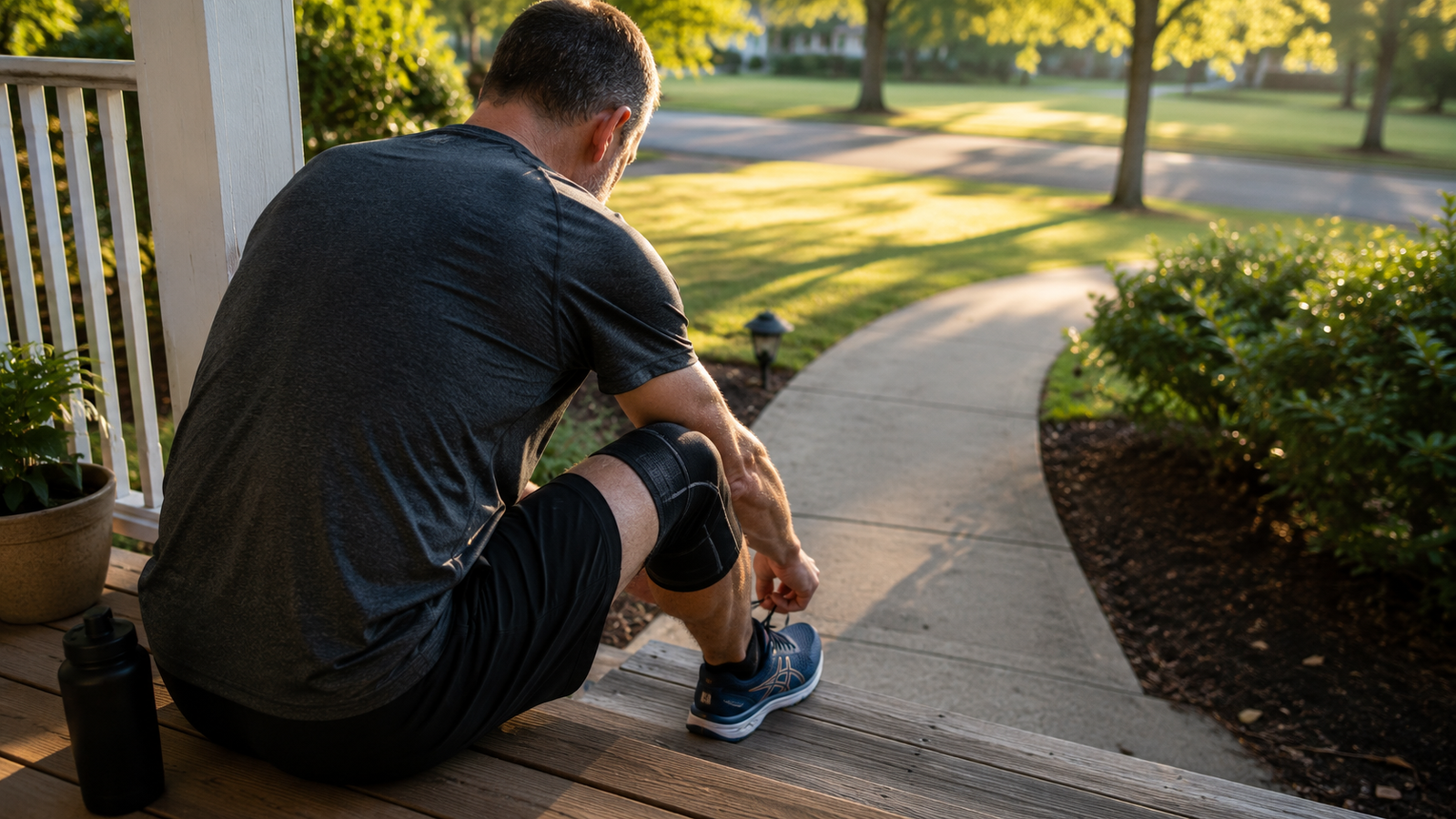
The injury did what injuries do now: it stopped getting better before it finished healing. Maybe it is the shoulder from a March pickup game, the calf you strained on a weekend ride, or the knee that never quite settled after you got back into training. You did the sensible things. You rested it, iced it, gave it the couple of weeks that used to be enough. And here you are, months later, still working around it.
Here is the part most people notice and rarely say out loud: recovery gets slower every year. The same body that shrugged off a sprain at 28 negotiates with it at 48. That is not weakness, and it is not in your head. It is physiology, and physiology can be measured.
We will not sell you a shortcut. What we offer is a medical program: measure what is going on in your body, review the results with a licensed provider, and build a recovery and repair plan around your numbers, with honest timelines attached.
Why Recovery Slows Down as You Get Older
Tissue repair runs on processes that change with age, and most of them change quietly. The rate at which the body rebuilds protein tends to decline, which matters because muscle, tendon, and ligament are protein. Tendons and ligaments have a limited blood supply to begin with, and circulation to those tissues often decreases further over time. The hormonal signals that drive repair generally shift downward through the 40s and 50s. Low-grade inflammation can linger longer after an injury than it did a decade ago. Sleep, where a disproportionate share of repair happens, frequently gets shorter and lighter. And common nutrient levels that support tissue and nerve health, such as Vitamin D and B12, often drift without any symptoms you would notice on their own.
None of that means you are done. It means the inputs changed while the plan stayed the same. Rest and ice were built for a body that repaired quickly on its own. When that stops being your body, the useful next step is not more willpower. It is measurement.
What an Injury Recovery Program Through Telehealth Actually Is
An injury recovery program through telehealth is a physician-guided medical program that starts with lab testing to measure the factors that influence how well your body repairs, including inflammation markers and nutrient status, then builds a personalized plan with a provider licensed in your state, adjusted over follow-up visits held online. It is not a replacement for emergency care or imaging after an acute injury. It addresses the slower problem: a body that no longer repairs on the schedule it used to, and a plan that has never once looked at your labs.
How the Program Works
We are not a wellness spa. We are a precision medical practice, and the process reflects that.
Step 1: Measure First, With the Recovery Peptides Panel
The program starts with the Recovery Peptides lab panel: $199, ten tests, ordered during your consultation. It covers the core health picture, including a complete blood count, a comprehensive metabolic panel, thyroid function, and key metabolic markers, and adds four measurements that matter specifically when healing is slow: CRP and ESR, two markers of inflammation, plus Vitamin D and Vitamin B12. These are diagnostics, not treatments: measurements that show your provider the conditions your body is trying to repair in. The blood draw happens at a Quest location near you and is included in the panel price. You receive your raw results directly from Quest, and your provider reviews them with you as soon as the lab returns them. If you already have recent labs, bring them; we will use them rather than asking you to pay to re-test.
Step 2: A Real Consultation With a Licensed Provider
Your initial visit runs about 30 minutes, online, with a provider licensed in your state, and evening and weekend slots are available. Expect real questions: what happened, how long it has been, what you have tried, what your training or work asks of your body, and what “recovered” needs to mean for you. This program’s medical content is reviewed by Jeff Beaty, DO, who is Board-Certified in Emergency Medicine and has practiced emergency medicine since the late 1990s. An ER physician has spent a career looking at injuries and deciding what each one actually needs next, and that judgment includes telling you when telehealth is the wrong tool. If you have signs of something acute, such as a joint that will not bear weight, visible deformity, or numbness, you need in-person evaluation first, and we will say so plainly.
Step 3: A Personalized Recovery Plan
Based on your labs and your consultation, your provider builds a plan for your situation. Depending on what your results show, that may include injury and recovery care, peptide therapy as a category of care where your labs and history support considering it, and nutrition support to match the demands of tissue repair. These are conversations, not defaults: nothing is prescribed because it is popular, and your provider will be straightforward about what each part of the plan can and cannot be expected to do. When medication is prescribed, it comes only from regulated US pharmacies, billed separately at pass-through pharmacy pricing and quoted to you before anything is prescribed, so you approve the number first. If your real goal is bigger than one injury, rebuilding overall strength and durability, that is its own program: see strength and recovery over 50.
Step 4: Follow Up, Adjust, and Hear the Truth About Timelines
Recovery is a moving target, so the plan is not static. Follow-ups are usually 15 minutes and track both your labs and how the injury behaves under real load. And we will keep telling you the truth about timelines: structural repair takes 4-8 weeks. Tissue rebuilds on a biological schedule, and anyone promising to compress that schedule dramatically is selling something. What a good plan does is make sure nothing measurable is working against you while that repair happens.
What Your First Month Costs
No surprise billing, laid out plainly. The consultation fee: $199 for your initial visit, $149 for follow-ups. Lab panels: from $99, with the Recovery Peptides panel at $199, draw included (see lab testing). Medication, if your provider prescribes it: billed separately at pass-through pharmacy pricing and quoted before anything is filled. We are cash-pay with no hidden fees, and we provide superbills for HSA/FSA reimbursement. Full details are on our transparent pricing page.
Who You’ll Work With
Your care visits are with licensed providers who treat patients in your state, 100% online:
- Texas: Jeff Beaty, DO; Keith Kirbow, APRN. Learn more about telehealth care in Texas.
- Florida: Jeff Beaty, DO; Brad Wasson, DO; Keith Kirbow, APRN. Learn more about telehealth care in Florida.
- Arkansas: Jeff Beaty, DO; Jeffrey McWilliams, MD, also Board-Certified in Emergency Medicine. Learn more about telehealth care in Arkansas.
- Louisiana: Jeni Baker, MD; Jeffrey McWilliams, MD. Learn more about telehealth care in Louisiana.
- Oklahoma: Jeffrey McWilliams, MD. Learn more about telehealth care in Oklahoma.
- Colorado: Keith Kirbow, APRN; Jeni Baker, MD. Learn more about telehealth care in Colorado.
- Oregon: Keith Kirbow, APRN. Learn more about telehealth care in Oregon.
We currently serve patients in Texas, Florida, Arkansas, Louisiana, Colorado, Oregon, and Oklahoma. The practice is telehealth-only: visits from home, labs at a nearby Quest, medication shipped from regulated US pharmacies.
Questions We Get Asked, Answered Honestly
Do peptides really help injury recovery?
The honest answer: the research is still evolving. Some peptide categories have early research that many clinicians find interesting for tissue repair and recovery, but large, rigorous human trials are limited, and anyone who tells you peptide therapy is a sure fix for injuries is ahead of the science. What physician-guided care means in practice is an honest conversation about what is and is not known, lab work before any prescription, medication only from regulated US pharmacies, and a plan that never rests on a single tool. Many patients find peptide therapy a useful part of a broader recovery plan. Whether it belongs in yours is a decision you make with a licensed provider, with your labs on the table.
Why does injury recovery take longer in your 40s and 50s?
Several things tend to change at once: the body rebuilds protein more slowly, blood flow to tendons and ligaments often decreases, repair-related hormone signals generally decline, inflammation can linger longer, sleep quality frequently drops, and nutrient levels like Vitamin D and B12 commonly drift. No single factor explains it, which is exactly why measuring beats guessing.
What lab tests are useful when an injury is slow to heal?
A useful workup typically includes inflammation markers such as CRP and ESR, Vitamin D and B12 levels, thyroid function, and core blood and metabolic panels, because slow healing often has more than one contributing factor. Our Recovery Peptides panel covers ten tests in this range for $199, ordered during your consultation and reviewed with you by your licensed provider.
What does the injury recovery program cost?
Your cost is the published visit fees plus labs and any medication: $199 for the initial consultation and $149 for follow-ups, lab panels from $99 with the Recovery Peptides panel at $199, and medication billed separately at pass-through pharmacy pricing, quoted before anything is filled. Superbills are available for HSA or FSA reimbursement. Full details are on our
pricing page.
Can an injury really be handled through telehealth?
For the right problem, yes. Acute injuries with red flags, such as inability to bear weight, visible deformity, or numbness, need in-person evaluation, and our providers will tell you so directly. What telehealth handles well is the recovery phase: the injury that is slow to resolve, the strain that keeps coming back, the return-to-activity plan that needs medical eyes on it. Visits happen from home, labs run through a Quest location near you, and if your provider believes you need imaging or a hands-on exam, they will say so and point you to it.
Ready When the Workarounds Stop Working
You have adjusted your training around it, favored it on stairs, told yourself another few weeks. There is a point where working around an injury quietly becomes the plan, and you deserve a better plan than that. If you want to understand what peptide therapy is before you talk to anyone, start with our peptide therapy overview.
Book a consultation